

 English
 中文简体
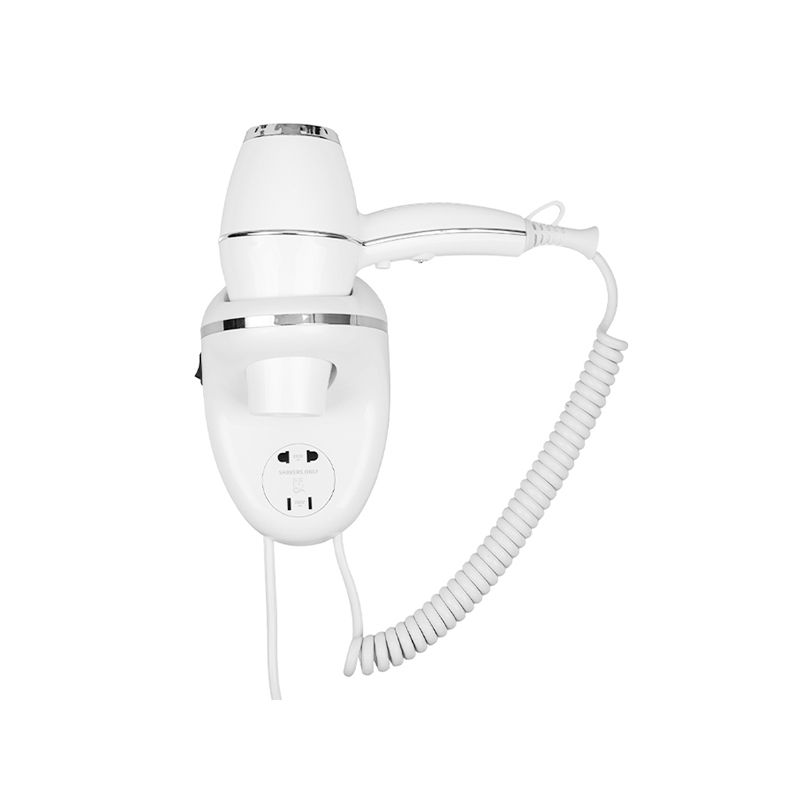

A guest drying their hair at seven in the morning is on the other side of a thin wall from someone still asleep. That situation explains why hotels ask about sound as often as they ask about heat. A Hair Dryer With Less Noise has to move enough air to dry hair at a reasonable pace, and it has to do so without a roar. Zhejiang Falin Appliances Co., Ltd. in Lishui City, Zhejiang, builds its Easy Low Noise Hair Dryer for the hotel range at 1600W, which puts the question directly: how does a dryer of that power keep its sound down?
Noise Comes From Moving Air as Much as From the Motor
People often assume that the motor makes the bulk of the sound in a hair dryer. In practice, the sound comes from three places together: the motor itself, the fan blades cutting through air, and the turbulence created as air squeezes through the housing and out of the nozzle. For a Hair Dryer With Less Noise, turbulence is the part that design can change without lowering power. Noise is also reported in decibels at a stated distance, so two figures compare fairly only when the distance and test conditions match. A smooth airflow path from the intake through the fan and past the heating element lets air travel in a steady stream, and a steady stream makes less noise than a ragged one. The R&D engineers at Zhejiang Falin Appliances Co., Ltd. design the dryer as a whole, and sound depends on that overall design more than on any single component.
What 1600W Means in Practical Terms
The Easy Low Noise Hair Dryer is rated at 1600W and operates on 220-240V at 50 or 60Hz. At those voltages, the dryer draws roughly 6.7 to 7.3 amperes, a normal load for a hotel bathroom or bedroom socket. Power of this level gives the heating element enough capacity to dry hair in a reasonable time. A shorter drying time also reduces the total minutes of noise a neighbor hears, which makes a Hair Dryer With Less Noise easier to live with than a quieter-sounding unit that takes twice as long. A clean airflow path supports that shorter drying time because less energy is lost to turbulence.
A Compact Body That Shapes the Airflow
This Hair Dryer With Less Noise measures 135 by 100 by 250 mm and weighs 1.0 kg. The body is small enough to sit in a bathroom drawer and light enough to hold comfortably during a full drying session. Body size also affects sound, because a thin housing can vibrate and a loose fit around the fan can rattle. A compact, rigid housing keeps the airflow path inside consistent and stops the shell from adding noise of its own.
Pitch Matters as Much as Volume
Two dryers can show the same decibel reading and still sound very different. A high, thin whine from fast fan blades irritates the ear far more than a low, steady hum, and a Hair Dryer With Less Noise aims to move its sound toward the lower end. Blade count, blade spacing, and the gap between blade tips and the housing all shape the pitch. A guest in the next room hears the whine through a wall long before the hum.
Nozzle and Outlet Design
Air accelerates as it passes through a narrowing nozzle, and fast air over a sharp edge whistles. A Hair Dryer With Less Noise uses a rounded outlet and a smooth transition from the housing to the nozzle, so the air leaves without a hard edge to whistle against. On a Hair Dryer With Less Noise, grille holes are sized the same way, because small, sharp-edged holes add a hiss at the intake.
Fan Speed Changes Sound Quickly
Fan noise rises steeply with speed, and a small drop in speed removes a large share of the sound. Where a dryer offers speed settings, a low setting is the quiet choice for early mornings and late nights. A Hair Dryer With Less Noise still needs enough airflow at that setting to dry hair without a long wait.
Bathrooms Amplify Sound
Tile, glass, and plaster reflect sound instead of absorbing it, so a hotel bathroom makes every dryer sound louder than it does in an open room. Sound escapes through vents and thin doors into the sleeping area. A Hair Dryer With Less Noise used in such a room works better when the noise is lowered at the source, because a closed door only lowers it partly.


 Building 19, Block 9, Bihu Wangyang Town, Liandu District, Lishui City, Zhejiang Province, China
