

 English
 中文简体
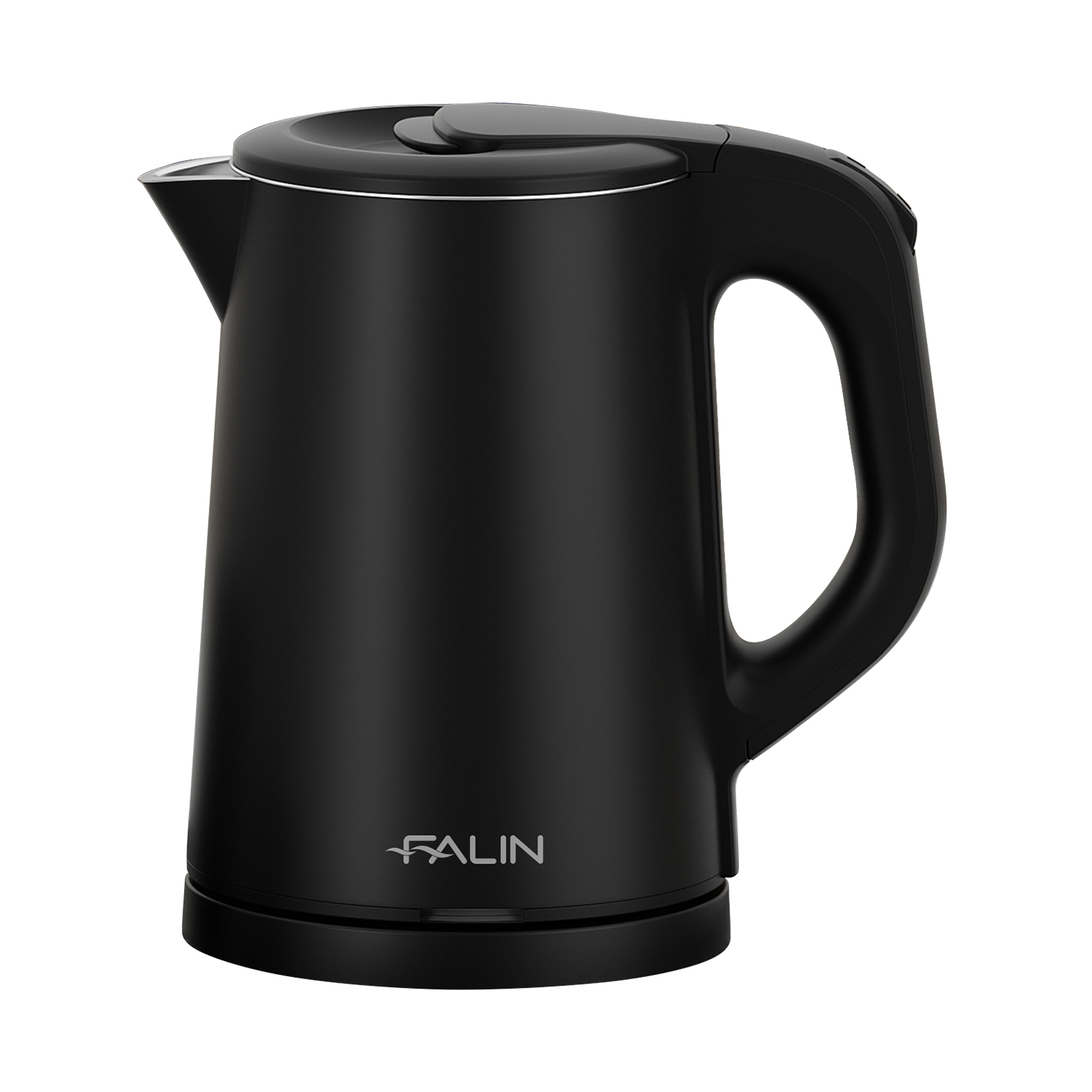
An Energy Saving Electric Kettle cannot change the physics of heating water, and the number that carries the weight in any comparison is one that no kettle can alter. Raising a litre of water from 20 °C to 100 °C takes the same amount of energy whichever kettle does the work. What a kettle can change is how much extra energy is lost on the way, and that is where the word "saving" has a measurable meaning.
The Fixed Part of Heating Water
Water takes about 4,186 joules to rise by one degree per kilogram. Multiply that by one kilogram and an 80-degree rise, and the result is roughly 335 kilojoules, or 0.093 kilowatt-hours. This is the energy that actually ends up in the water, and it is set by the amount of water and the temperature rise, not by the appliance.
A real Energy Saving Electric Kettle still draws more than that from the socket, because some heat leaves through the body, the lid and the spout. If a kettle delivers 90 percent of its input to the water, the same litre takes about 0.103 kWh from the wall. The gap between the two numbers is the territory in which design makes a difference.
Power Changes the Time, Not the Energy
Consider two kettles with the same efficiency, one rated at 1.8 kW and one at 2.2 kW. At 90 percent efficiency, the first brings a litre to the boil in about 3.4 minutes and the second in about 2.8 minutes. The energy delivered to the water is identical, so a higher power rating does not by itself reduce consumption.
It can help in a small way. A faster boil gives heat less time to escape, so two kettles of equal construction lose slightly less at higher power. The effect is modest, and it explains why an Energy Saving Electric Kettle is judged on its construction as much as on its wattage.
Where a Kettle Can Save Energy
For an Energy Saving Electric Kettle, the largest lever is the volume of water. Boiling half a litre more than needed adds about 0.046 kWh to the water and roughly 0.052 kWh at the socket. Do that three times a day and the total over a year approaches 57 kWh, none of which went into a cup. A visible water-level mark, an easy-fill spout and a design that makes one or two cups simple to boil all push users toward the amount they need.
In an Energy Saving Kettle, construction matters too. A snug lid, a body that holds heat and a base that transfers heat directly to the water reduce losses during and after the boil. An automatic power-off switch ends the cycle once the water has boiled, so the element does not keep running and send energy out as steam. These details do not change the 335 kilojoules per litre, but they reduce the amount added beyond it.
Falin's Kettle Range
Zhejiang Falin Appliances Co., Ltd. has made hand dryers and hair dryers since 1999, products built around heating elements and electrical controls, and it extends that experience to an Electric Water Kettle line for Energy Saving Electric Kettle projects. The factory works from a production base of 13,000 square metres with more than 100 employees, and its engineers handle custom designs for OEM and ODM customers.
Its kettle category lists three models: an Automatic Power Off Kettle, a Stainless Steel Liner Electric Kettle and a Fast Boiling Water Electric Kettle. Each addresses a different part of the energy picture, from the end of the cycle to the speed of the boil. Half a litre less water per boil is worth about 0.046 kWh each time, and that is the kind of figure an Energy Saving Electric Kettle is built to make easy.


 Building 19, Block 9, Bihu Wangyang Town, Liandu District, Lishui City, Zhejiang Province, China
