

 English
 中文简体

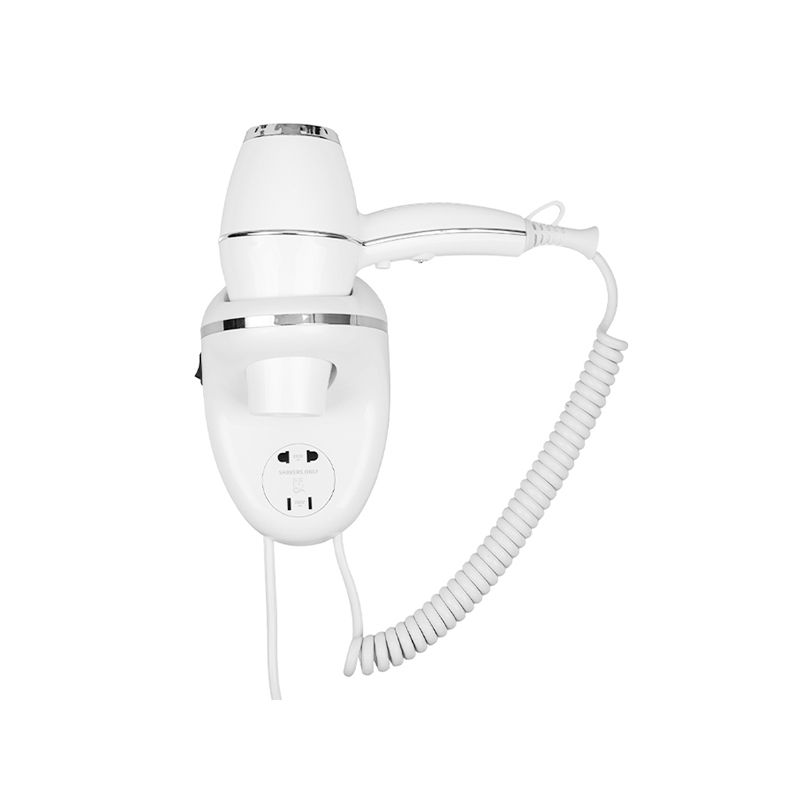

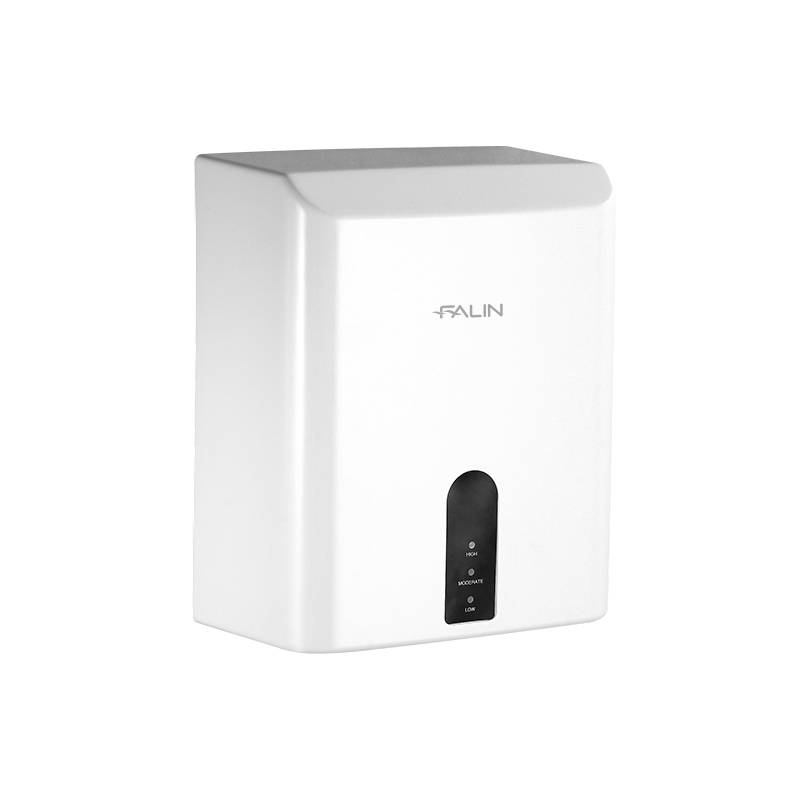

Energy Saving Hand Dryers are judged by two numbers that pull against each other: the watts drawn while the unit runs and the seconds a pair of hands needs to dry. A low-wattage dryer that keeps running for twice as long does not save energy, and a powerful one that dries hands in a moment may use little per visit. Zhejiang Falin Appliances Co., Ltd. has made small appliances in Lishui, Zhejiang since 1999, and its commercial and household hand dryers are specified with both numbers in view.
Energy Per Dry Is Power Times Time
Each use of a hand dryer draws energy equal to its power multiplied by the seconds it runs. That is why a spec sheet for Energy Saving Hand Dryers with just a wattage figure says little. Two commercial models from Falin show how the numbers sit together.
|
Model |
Rated power |
Air velocity |
Other stated data |
|
Fully Automatic Sensor Hand Dryer |
1800 W |
15 m/s |
650 W motor, 2600 rpm, drying in 10-12 seconds |
|
Hot/Cold Air Hand Dryer |
1200 W |
40 m/s |
20,000 rpm motor, 62 dB |
The sensor model draws more power and reaches dry hands in a stated 10-12 seconds, while the hot/cold model draws less and moves air at a much higher speed. Neither figure alone tells which one costs less per use, and that is the point of designing Energy Saving Hand Dryers around the pair.
Where the Watts Go
Inside a hand dryer, power goes to two jobs: turning the fan motor and warming the air. In the sensor model, the motor accounts for 650 W of the 1800 W rated power, so heating and other loads take up the rest. Warm air helps water leave the skin faster, yet it carries the larger share of the electrical load.
Falin offers a hot/cold air model for this reason. A choice between warm and cool air lets a washroom in a warm climate or season run without heating, and a cool-air run draws less than a warm one. For Energy Saving Hand Dryers installed in sports facilities, factories and warm regions, the option to leave heating out is a direct way to reduce use.
Faster Air Cuts Run Time
Water leaves the hands mostly through airflow, with heat as a helper. A high-speed motor at 20,000 rpm pushes air at 40 m/s in the hot/cold model, which strips water from the skin in a shorter time than a slower stream. A shorter run lowers energy per use in Energy Saving Hand Dryers even when the rated power is not small. Brushless motors suit this job, because they have no brushes to wear, run efficiently at high speed and keep their performance over long service hours. The Ultra-Thin High-Speed Brushless Hand Dryer in the Falin range follows that route in a slim body measuring 119 × 42 × 213 mm.
Sensors Decide When the Meter Runs
A unit that keeps running after hands have left wastes energy in small amounts that add up in a busy washroom, so sensing is part of how Energy Saving Hand Dryers are built. Automatic sensing links the run time to the hands: airflow begins as hands enter the drying zone and stops when they leave, so the running time is the drying time. Falin's Fully Automatic Sensor, Commercial Intelligent Sensor and Bathroom Smart Sensor models are built around this behaviour, and a touchless start also removes the need to press a button.
Sensor placement matters as much as the sensor itself. When the sensing zone sits where hands naturally go, airflow begins immediately and the user does not wave about to trigger it. That keeps hands under the air stream for the whole run, which makes Energy Saving Hand Dryers more effective per second of running time.
One Platform, Several Markets
Mains supply differs between markets, and a hand dryer built for one voltage cannot simply be shipped to another. The Ultra-Thin High-Speed Brushless Hand Dryer is rated for 220-240 V at 50/60 Hz, which covers a wide range of supplies in a single unit. Falin also takes OEM and ODM projects, with its R&D design engineers adjusting the balance between motor power, heating and sensor behaviour for each customer. A project for a cool-climate hotel can lean on warm air, while one for a gym can lean on fast cool air, and both remain Energy Saving Hand Dryers because the figure that matters is the energy used in each dry, not the number printed on the label.


 Building 19, Block 9, Bihu Wangyang Town, Liandu District, Lishui City, Zhejiang Province, China
